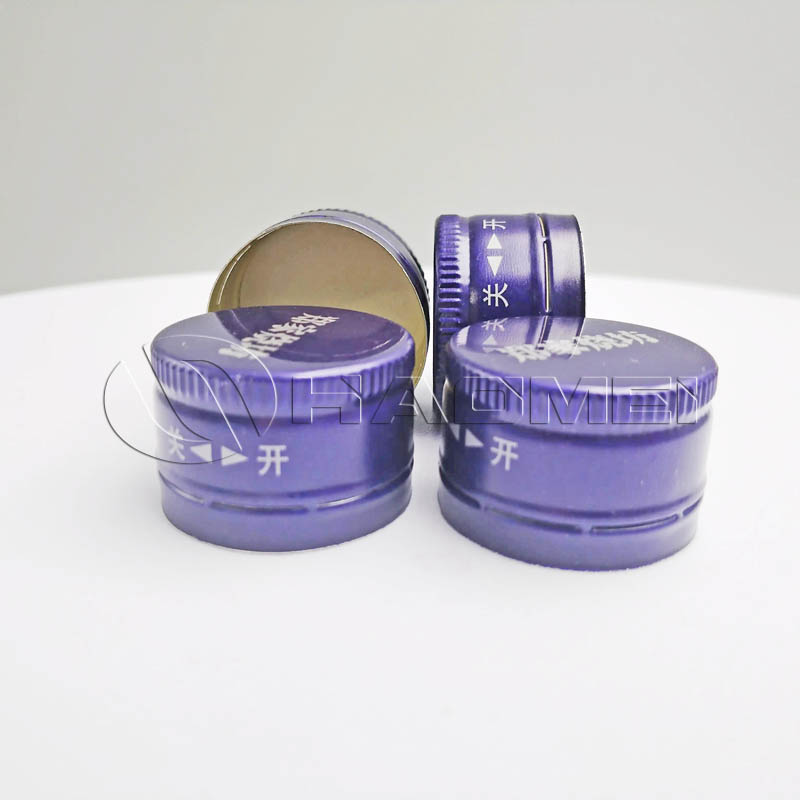
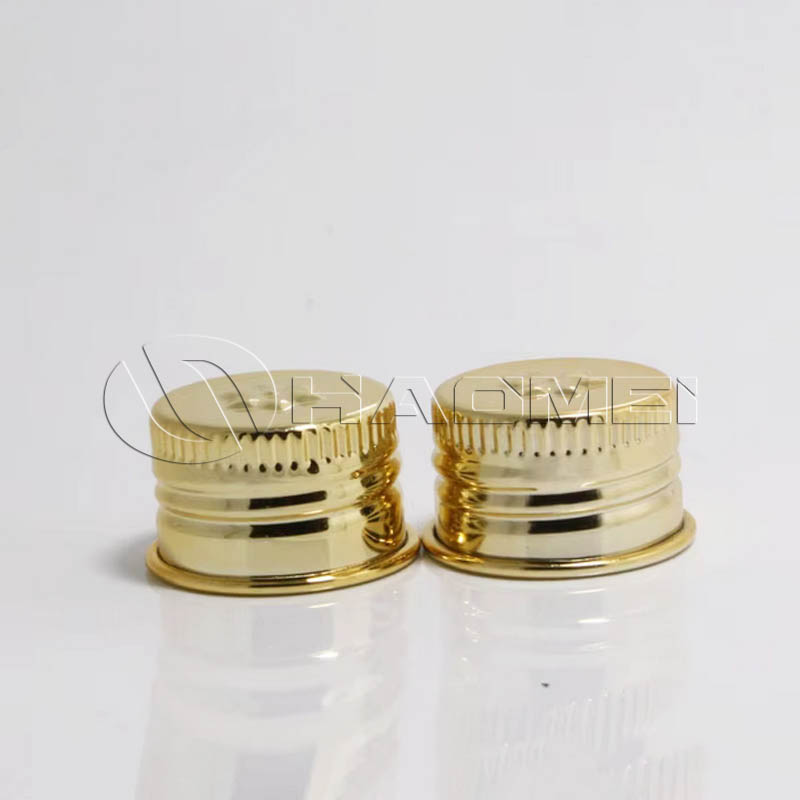
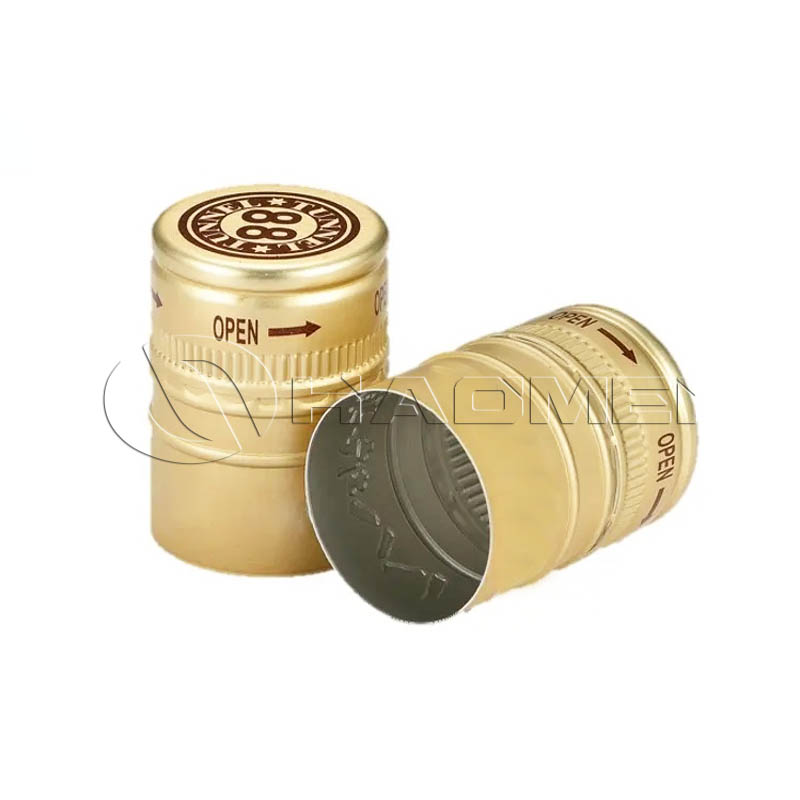
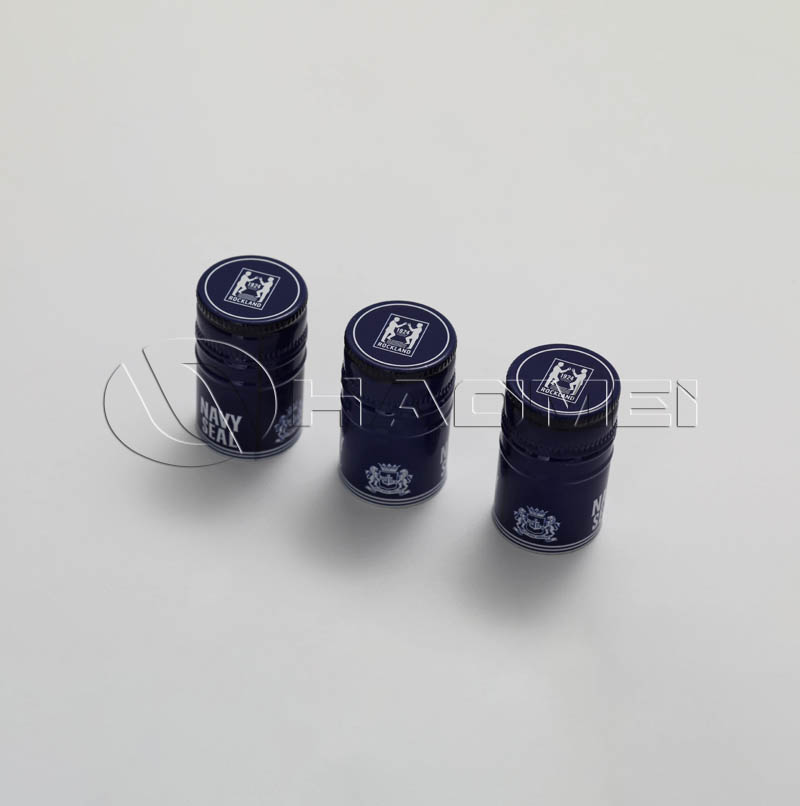
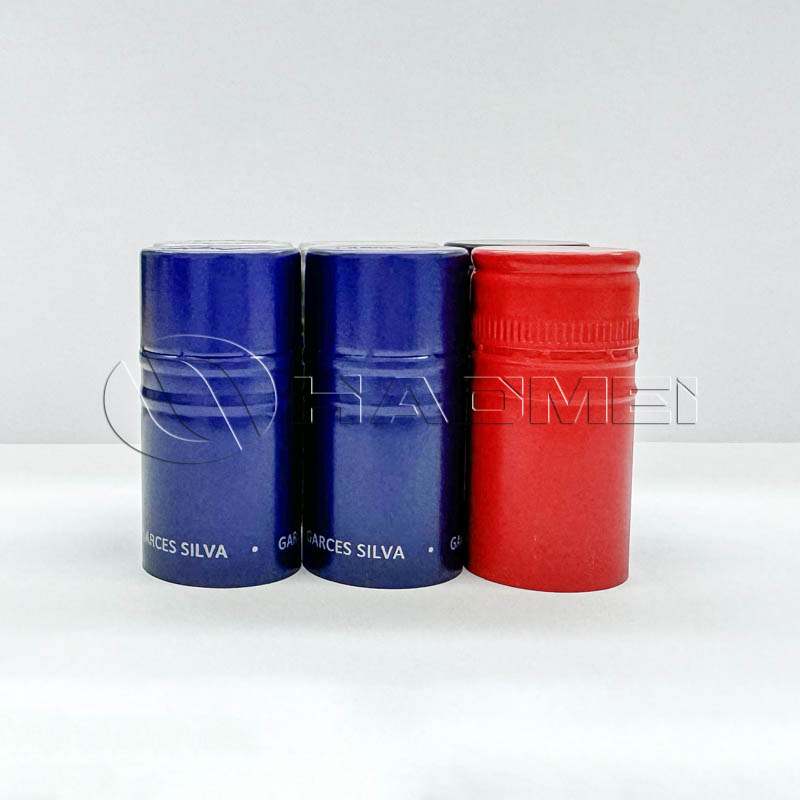
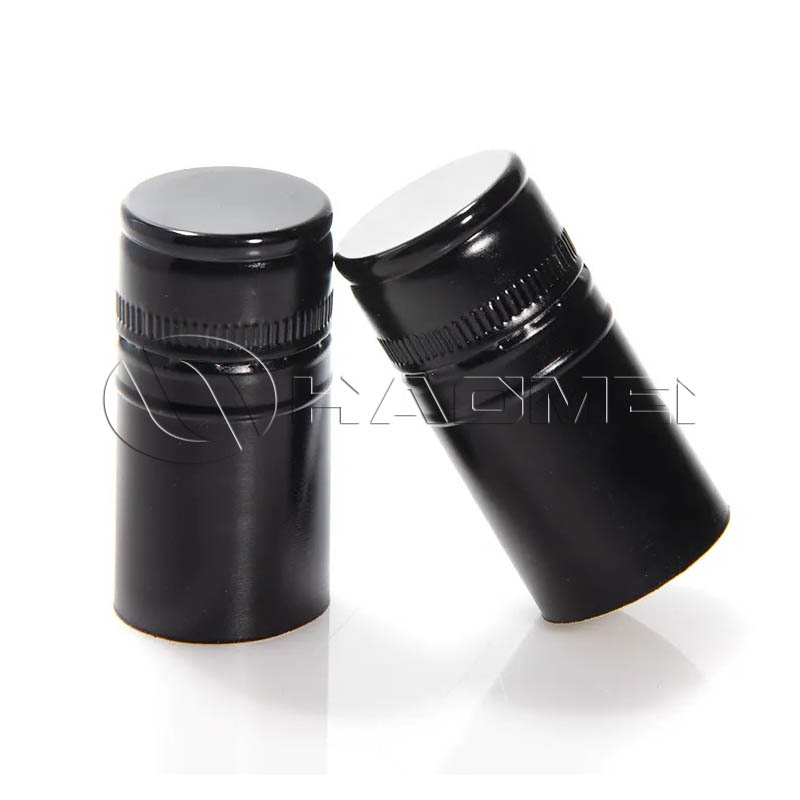
In 1959, the French company Seguin Moreau first applied the screw cap originally used successfully for spirits and liqueurs to wine bottles. Aluminum screw caps (also known as aluminum ROPP caps) have since become a mainstream sealing solution in the global wine industry due to their ease of opening and their ability to prevent cork taint. However, the sealing performance of a screw cap depends entirely on the liner placed inside the cap.
Although the low oxygen transmission rate (OTR) of screw caps was once considered a major advantage for preserving wine freshness, it was later discovered that wines sealed with extremely low OTR can mature too slowly and may develop reductive aromas such as struck flint, rubber, or burnt match. The introduction of improved liner materials has enabled winemakers to achieve select oxygen transmission levels based on the wine's needs.
Among these liner materials, Saranex and Sarantin are the most widely used options. Their core differences lie in barrier structure and oxygen transmission rate, factors that directly influence wine shelf life and flavor evolution.
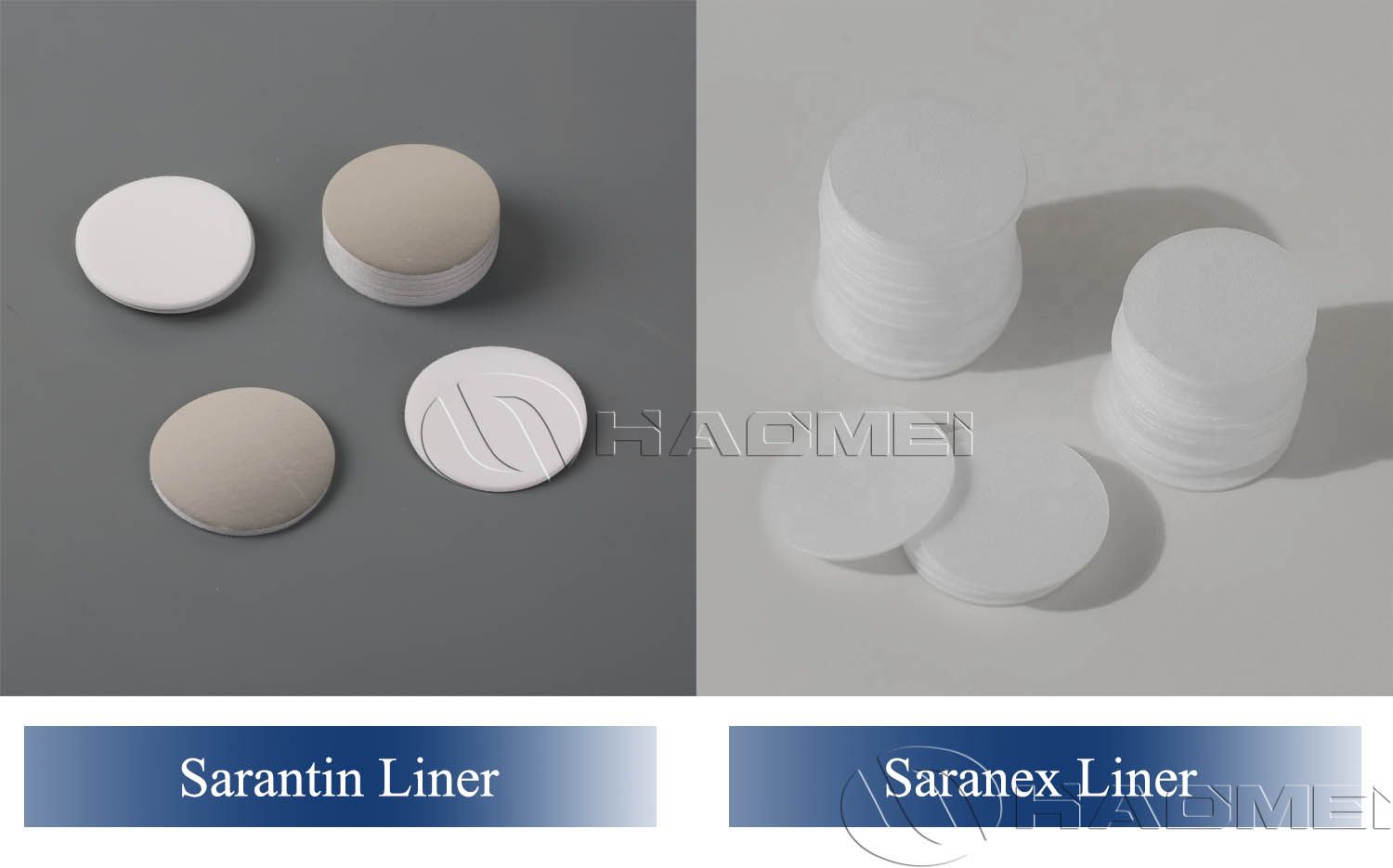
Sarantin Liner
The Sarantin liner is constructed by bonding a thin layer of metal foil (tin foil) onto a foamed polyethylene (PE) base. Tin foil has zero permeability, providing an almost absolute barrier to oxygen and water vapor. This creates an environment inside the bottle that is nearly completely isolated from the outside.
On top of the tin foil layer is a food-grade PVDC (polyvinylidene chloride) coating, which is the part in direct contact with the wine. This ensures hygienic sealing and excellent chemical stability.
This multi-layer structure is designed to minimize oxidation, making Sarantin ideal for wines that rely on slow bottle aging to develop complexity.
Saranex Liner
Saranex liners use several layers of specialized Saranex polymer typically including PVDC to create a controlled barrier. Although highly protective, the OTR is not zero. Instead, it allows ultra-low but controlled oxygen ingress, creating a "slow-breathing" environment inside the bottle.
This design is particularly beneficial for wine varieties prone to reductive aromas (e.g., burnt match, sulfur, rubber). The extremely small amount of oxygen helps maintain aromatic freshness and fruit vibrancy.
Wine Aluminum Cap Comparison: Saranex vs. Sarantin
| Performance Indicator | Saranex Liner | Sarantin Liner |
| Gas Barrier | High | Medium |
| Chemical Resistance | High | Good |
| Elasticity & Seal | High | Medium-High |
| Processing Performance | Medium | High |
| Cost | Higher | Lower |
| Storage Life | ≥ 2-5 years | 6-12 months |
Application Scenarios
Applications of Aluminum ROPP Caps with Saranex Liners:
Suitable for white wines, rosé wines, and most fruity red wines not suitable for long aging. Wines expected to be consumed within 1-3 years. Also suitable for winemakers who want to soften tannins quickly with minimal oxygen intake, reaching their optimal drinking window earlier.
Applications of Aluminum ROPP Caps with Sarantin Liners:
Sarantin is a high-quality option for long-term storage (3+ years). Although more expensive, it maximizes the stability of the wine. Suitable for top-tier aromatic white wines (such as Riesling and Sauvignon Blanc), where winemakers want to retain their fresh, sharp fruit aromas and prevent oxidation.